
LADY
PLAQUES
She lived here.
She had a name.
Beeston has a very healthy population of more than thirty Blue Plaques to commemorate notable locals.
Up until 2025, none was for a woman.
A Plaque of One’s Own.
On International Women’s Day 2023, we launched a campaign to recognise the women of our district, with plaques of their own. Since then we have researched and scoured archives, and have found more than a dozen potential individuals worthy of a plaque.
In 2025, we will have unveiled two new Blue Plaques to women. We have a list of other ladies waiting for a plaque, but we need to raise money to have them made and installed. Each plaque can cost around £800/£1k to be made.
Nominate
We will need the help of locals like you to nominate the historical women who lived, worked, and achieved things here. Public nominations are essential to the work of any plaque scheme, and Lady Plaques is no exception. Indeed, owing to poor documentation of women’s lives throughout history: evidence and records are scarcer and harder to find, campaigns of this type rely even more upon stories in families, groups, and communities – therefore, nominations are welcomed by anyone.
If there’s a historical woman from Beeston, Chilwell, Attenborough, Bramcote or Toton who you think deserves a plaque, we want to hear about her!
However, in the event that many more such suggestions may be received than can be approved, and given the resources available, there are highly selective criteria for nominations. You can view and download the criteria here.
Donate
As a Registered Charity, we need funds raised to be able to achieve our objectives, and Plaques are no different. You can help our Plaques campaign today by making a donation!
The Plaques
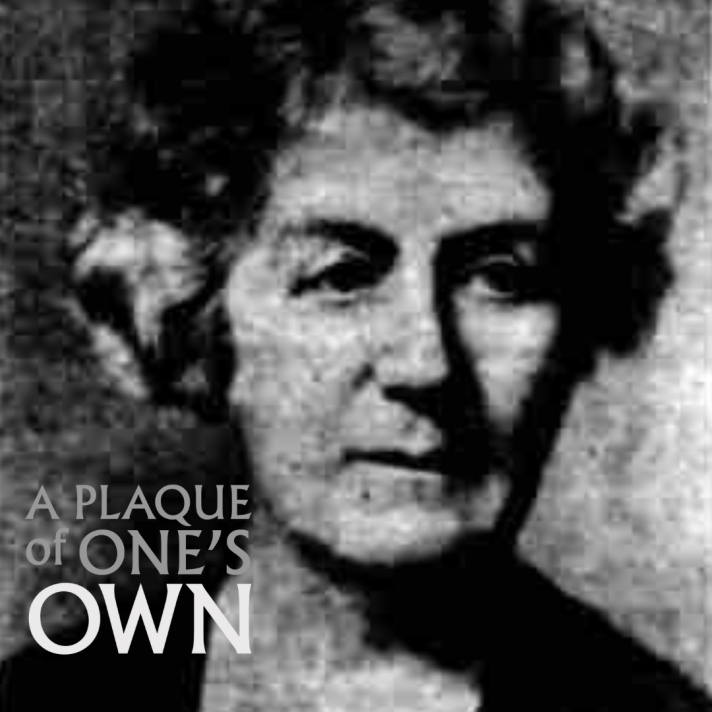
Eleanor Littlewood MBE
1879 – 1962
at: Manor Lodge, Middle Street, Beeston.
Our First Lady Plaque is Eleanor’s.
Eleanor was born at The Willows, Dovecote Lane. A large Victorian house (on the site of the current social housing complex of the same name) which was demolished in 1978.
She was the daughter of Francis Usher Waite (of Waite Coebould & Faulkner, Beeston Brewery founders) and Charlotte Waite (nee Gent). When she was about 9 her widowed mother remarried, (Dr James Butler local doctor and a Trustee of Beeston Land Society) and she moved to Manor Lodge. She married Arthur Burkin Littlewood (a solicitor) in 1899 and inherited Manor Lodge when her mother died in 1912.
It wasn’t until 1918 that women over 30 and with property had the right to vote or stand in elections for parliament. Since 1866 women could stand for some local councils and committees.
She was founder of Beeston Welfare Association – when she realised Beeston had none, she set up an Infant Welfare Centre in her own home. It later moved to Dovecote Lane premises when it became too large.
In 1920 she was elected as Councillor of Beeston Urban District Council – the first female Conservative in our district to do so, and only the second woman of any party (the first was Beatrice Hart, Labour, in 1919).
The list of her other achievements include:
Founder: Beeston Women’s Conservative Association
Vice President of Beeston Conservative Association
Vice Chancellor of East Midland Labour Advisory Committee
Beeston School Manager
Chairman of Beeston Nursing Association
First female Chairman of Housing Committee
First female Chairman of Fire Brigade Committee
First female Chairman of Ambulance Committee
First female Overseer in the county, allegedly, the Country –possibly even Europe (but we’re looking in to this…)
Eleanor was awarded an MBE in 1937 for her political and public service.
She died, aged 83, at Manor Lodge, Beeston in 1962.
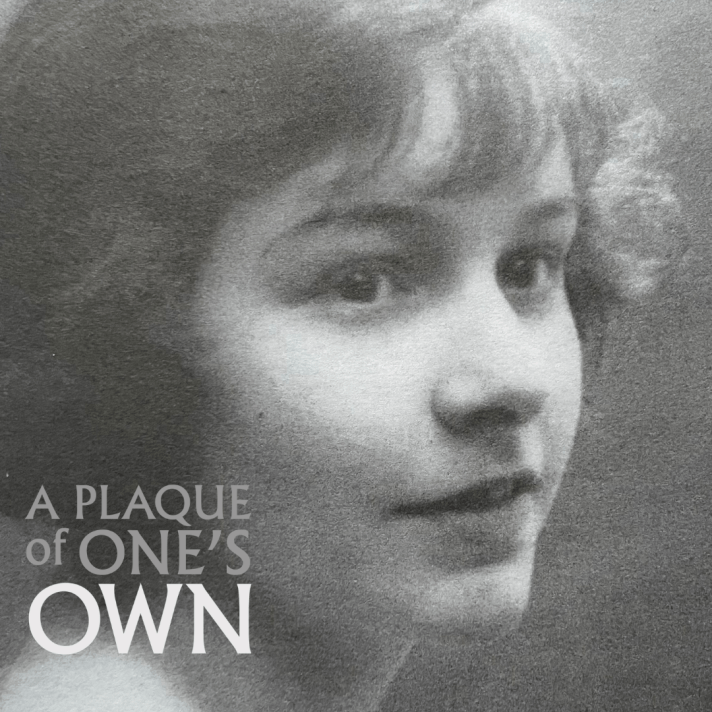
Nan Green
1904 – 1984
at: Surrey Cottage, 12 Glebe Street, Beeston.
Nancy ‘Nan’ Drusilla Farrow was born in Beeston, in 1904. She was born in the house designed and built for her father, Edward Farrow – then General Manager at Raleigh – by “an architect friend” (John Rigby Poyser). She attended the local private school, West End School.
The family’s prosperous beginnings were changed utterly by the outbreak of WWI when her father lost his job at Raleigh, and his health subsequently failed. Nan’s mother was already frail, and much befell to Nan thereafter in the family’s welfare. She was about 14 or 15 years old when the family, then poverty-stricken, moved to Birmingham.
Nan married George Green, a cellist, and joined the British Communist Party. When the Spanish Civil War broke out she followed her husband to Spain to volunteer for the Republican cause. Leaving her home and her family to face head-on the threat to it – as she then saw it – by Franco’s advancing Fascism in Spain.
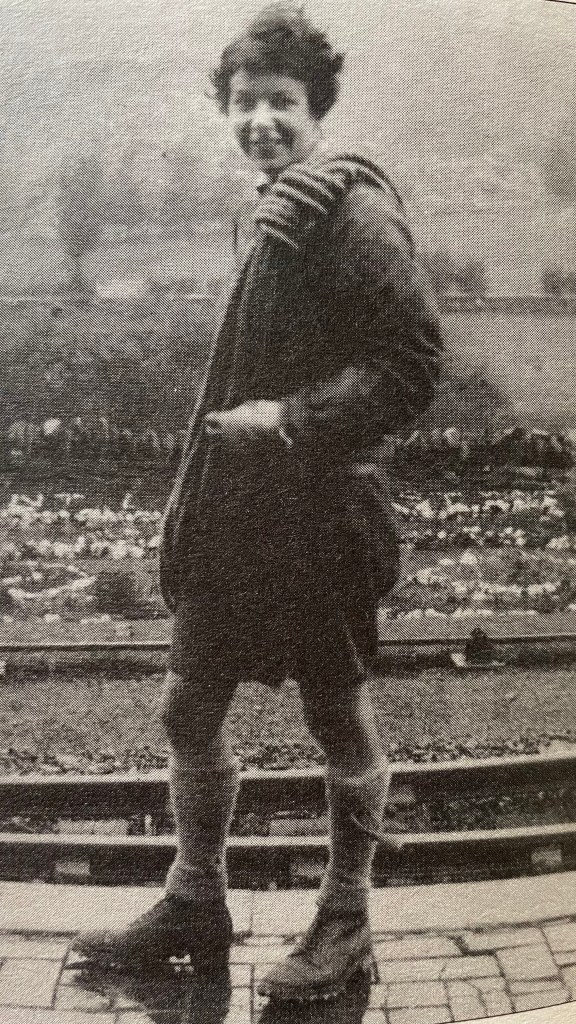
Her work in the International Brigades, and Spanish Medical Aid did much to alleviate the suffering of victims of war and oppression – by improving conditionss and medical supplies in hospitals; accompanying 5,00 refugee children to safety in Mexico, and by campaigning exhaustively for awareness and assistance for the loss of life and liberty in Spain long after the war. Her work took her around the world, notable to China, Europe, South Africa and London – in various roles as Secretary, translator, editor, and in Civil Defence during the Blitz.
Nan grew up in Beeston, and it is probably here where she first felt her keenness for fairness; for her abhorrence of snobbery and formality. She would play with ‘the lower class’ children despite strict instructions not to – even a “tanning” didn’t put her off –and protested the inequality of her duties as ‘daughter’ compared with that of her brother’s as ‘son’.
By the time she left for Birmingham, experience meant that her caring nature; curiosity, and rebelliousness were already baked-in. Nan would grow up to occupy the forefront of Socialism; becoming a woman whose life’s work was actively doing something about the inequalities others suffered.
Nan Green Speaks
Hear Nan speak about her life in her own voice via the Imperial War Museum audio archive.
LISTEN HERE >>>>
Donors
This Plaque was made possible by public donations from:
Karen Attwood
Rebecca Ashton
Beeston & Chilwell Garden Trail visitors 2023
Broxtowe Independents councillors
Gillian Coker
Phillip Ellis
Kate Faole
Tamar Feast
Gwyneth Fraser
Barney Green
Crispin Green
John Haywood
Miriam Jackson
Sylvie Nicholls
Miss SR Price
Red or Blue?
Beeston Civic Society celebrated its 50th year in 2023. We wanted #LadyPlaques to form part of the year’s celebrations – and so in recognition of this, and to mark the first plaque installed, we decided to make Eleanor’s plaque ‘Fire Brigade Red’ in recognition of her saying the Fire Brigade had been her greatest interest.
Selection criteria remains as strict as with the previous Blue Plaque scheme, with the addition of temporary priority among the subjects suggested being given to local women.
We hope to establish a new Blue Plaque panel soon in the future to consider subsequent nominations – male and female. The same criteria will apply.
Many ‘blue plaque’ schemes exist up and down the country. Despite the name, not all are blue! The original scheme began in London in 1866, by the Society of Arts, to commemorate famous people. It is the oldest plaque scheme in the world – and the first plaques were not blue. It wasn’t until London County Council took over administration of the scheme that the uniform blue design was adopted, in 1921.
Since then, many similar schemes have sprung up nationally and internationally, administered by different bodies such as local authorities, civic societies, resident associations, guilds and trusts.
Plaques for the Boys
Campaigners, such as Blue Plaque Rebellion, have long called for greater parity in plaque schemes, there’s even a book about it (A Woman Lived Here: Alternative Blue Plaques, Remembering London’s Remarkable Women by Allison Vale).
With only 14% of its plaques being for women, even English Heritage (who now administer London Blue Plaque Scheme) launched a campaign in 2018 to encourage nominations of London women. Many other bodies now actively seek to address the issue in their plaque schemes. Some schemes have been set up specifically to do this – such as Purple Plaques in Wales.
We believe that our plaques should reflect the people who lived and worked in our district. In an ideal world, selection framework which already exists would achieve fairness. However, as this hasn’t been the case, more discerning action is required.
Rather than “a flurry of plaques” for women “simply because they’re women“, Beeston Civic is advocating for local women of merit who should already have been considered eligible. Women who’ll finally have their day.
Contact us
Please get in touch with us if you’re interested, or wish to be involved.
You can email Tamar at: plaques@beestoncivicsociety.org.uk
 Beeston Civic Society