We are calling on government, planners and politicians to take a real and genuine ‘Nature First’ approach. It could put wildlife into recovery and secure a greener future for our urban landscapes and the people that live, work and learn in them.
The UK, like most other countries worldwide, has seen significant loss of its plants, animals and fungi after centuries of habitat loss, development and persecution. As a result, the UK is now one of the most nature-depleted countries on Earth.
We believe Broxtowe could and should be exemplary in this regard. Why?
- Inexpensive measures (such as swift bricks, bee bricks and bat roosts) in all new developments help developers attain reputable sustainability certifications – such as Building Research Establishment’s Environmental Assessment Method (BREEAM) points. People like sustainable building contractors and developers. These things increasingly matter to people, and so support of developments is increased.
- Councils’ ensuring developers incorporate measure to retain, protect and enhance habitat for protected species receive fewer objections. It also works towards meeting their obligations set out in their Local Plans; the 25 Year Environment Plan; Government national policies, and the law.
- Gentle density allows space for nature. People are happier with more green, natural spaces around where they live. People will want to live here!
- Where people want to live, businesses thrive. Communities are made.
- Residents benefit from the healthier, happier and improved amenity that making space for nature provides, and incorporating these measures into the Local Plan and having mandatory measures to meet for planning approval means it becomes the responsibility of the applicant to demonstrate how standards are met
- Councils, councillors, local residents, related stakeholders, and wildlife associations are no longer burdened by the responsibility to recommend or request (optional) measures be taken every time a new build or development appears at Planning.
Biodiversity Net Gain is not enough
Current policy on Biodiversity Net Gain (BNG) does not go far enough. ‘Biodiversity’ only pertains to flora, so while any measure to ensure gains for for plant species – and the habitat they undoubtedly create – is welcome, it really isn’t enough to protect and save some of our most endangered species. We don’t think 10% is sufficient, either.

We’re calling for a 20% gain for nature – all developments must strive to deliver a 20% increase in nature onsite and, as a last resort offsite, backed by the Government’s Biodiversity Net Gain (BNG) standard.
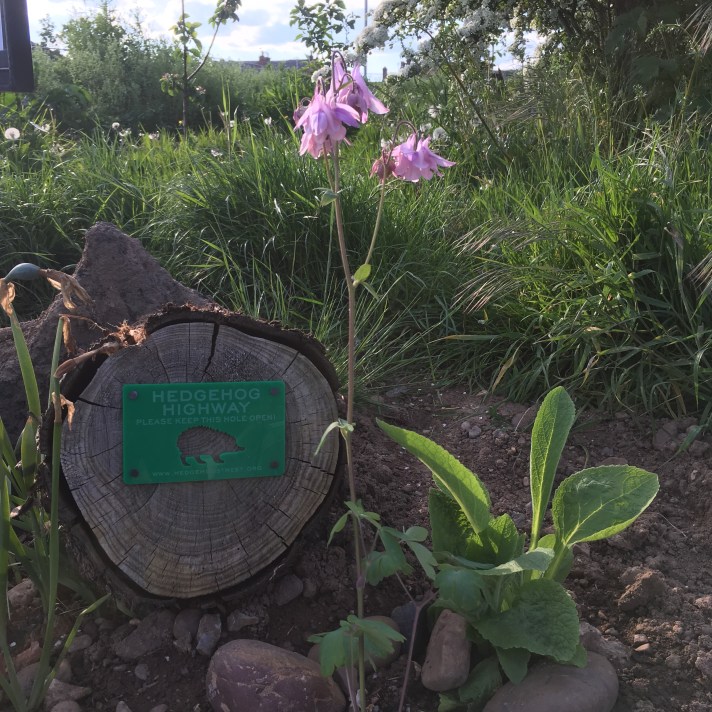
New Strategy for Hedgehogs published by People’s Trust for Endangered Species (PTES) and The British Hedgehog Preservation Society (BHPS). Click the photo above to read the full report.
It finds that rural hedgehog populations continue to decline by between 30 and 75% across different areas since 2000. Action is needed – fast, and now!
Maximum local effect
The latest changes to planning regulation seeking to embrace a 10% Biodiversity Net Gain (BNG) should be established as an absolute minimum across the Borough.
We should emphatically require rigid compliance with this regulation and ensure that the benefit is applied locally for the benefit of local communities. Far too often have we seen developers ‘offsetting’ their commitments to Section 106 obligations with resulting benefits being accrued remote from developments. Our understanding is that there already exist huge banks of underproductive land held for potential offsetting. Many of which are away from our local communities.
Examples on our doorstep
The development of the Toton & Chetwyn site ought to be an exemplar – demonstrating what can be achieved by bringing biodiversity back into the suburban/urban environment – bringing nature and wildlife back to where people live and work, rather than investing it in some dubious but
convenient scheme in some obscure field, forest, or lake miles away from the people who will ultimately have to foot the bill.
Our understanding is that the East Midlands Development Corporation are onboard with their description of the Attenborough Great Park emdevco.co.uk . Additionally we hear that plans are afoot to develop wildlife and nature walk corridors linking heritage sites across substantial areas of the Borough. These are to be welcomed and applauded.
Practices to avoid
Post war farm land sequestered for military use was expected to be returned to the famers, too often this was not the case and quality agricultural land is now used commercially.
Currently solar farms too often being sited on good quality food producing land, reducing the UK ability to grow its own food. Its our belief that ‘Solar Farms’ farms should only be allowed on existing brown filed sites or non-food producing, marginal or waste land
Our understanding is that current law provides for such sites to become ‘Brown Field’ at the point they are no longer required, are none-viable. This has the potential to open significant scars across our rural map, potentially permanently reducing food production.
Small steps = big strides
There are opportunities here for Broxtowe to establish exemplar policies including smaller scale projects. It has been our contention for some time that provision for Bees, Bats, Birds, and Bugs should be conditions of planning and written into council planning policies. These could include
boxes and bricks for swifts, bats, bees, and the like.
Electric vehicles and bike are increasingly popular, consequently the council should make provision for charging points to be incorporated in all developments. Additionally, the council could make advice about ‘greening’ readily available; with schemes for Rain Water Harvesting, Green Roofs, and Living Walls (avoiding north facing walls). Design ideas for small projects like storage sheds, flat roofs, and bin stores can conglomerate to have significant impact.
Time to be outstanding
It is now down to Broxtowe planners to set clear objectives, to establish exemplary policies, to make sure they hold developers to account – to make sure they deliver here on our doorstep for our benefit within the communities that councillors aim to serve.
Our suggestion is that Broxtowe should adopt a minimum Nett Biodiversity Gain of 20%, applied locally for local benefit. This policy would dovetail neatly into the existing ambitious plans Broxtowe has for BNG. Similarly a comprehensive suite of related policies could include greening, and provision for bees, bats, bugs and birds.
Bats
The first official International Union for Conservation of Nature (IUCN) Red List for British Mammals, four of the 11 mammal species native to Britain classified as being at imminent risk of extinction are bats. There are many measures we can take to help them.
Bat Bricks: The bat brick is a standard sized brick, shaped especially to allow bats to access the cavity of a house. They can be incorporated during both new build or renovation projects.

Moth-friendly landscaping: Bats are known to hunt along tree lines and so landscaping which retains old hedgerows, and trees, or seeks to replicate these conditions can create habitat perfect for Bats hunting ground. Plantings within landscaped municipal areas, or private gardens which include plant species that are food and breeding habitats for moths especially, and other invertebrates, which then support Bat species can help further.
Species could include:
Achillea millefolium – Yarrow
Dianthus armeria – Deptford Pink
Galium mollugo – Hedge Bedstraw
Galium verum – Lady’s Bedstraw
Knautia arvensis – Field Scabious
Lamium album – White Deadnettle
Leontodon autumnalis – Autumn Hawkbit
Lotus corniculatus – Birdsfoot Trefoil
Plantago lanceolata – Ribwort Plantain
Plantago media – Hoary Plantain
Rumex acetosa – Common Sorrel
Salvia pratensis – Meadow Clary
Scabiosa columbaria – Small Scabious
Silene alba – White Campion
Silene vulgaris – Bladder Campion
Taraxacum officinale – Dandelion
Trifolium pratense – Wild Red Clover
Verbascum blattaria – Moth Mullein
Verbascum nigrum – Dark Mullein
Birds
Swifts and House Martens:
Swifts travel more than 14,000 miles to the UK every spring. They pair for life, and return to the same nest site each year. Nesting primarily on houses, under eaves or roof slats, Swifts increasingly travel all this way only to find their nest gone; replaced with uPVC fascia and soffits.
A 58% decline from 1969 to 2018 brings Swifts to join the IUCN Red List of Threatened Species. Swifts should be a priority species in our Local Biodiversity Action Plan (BAP).
Swift Conservation estimates that we need to create 20,000 new Swift nest sites every year just to stabilise the current population.
Applying planning conditions to developments in Swift Alert Areas will help to achieve the local BAP and NPPF aims of safeguarding existing swift nest-sites and promoting the protection and recovery of a priority species. According to RSPB’s Swiftmapper, Beeston has significant areas of nest sites, and there are recent records for breeding Swifts – which could justify creating the whole town as a Swift Alert Area.
Swift Bricks: Swift bricks are inexpensive, simple and discreet. Replacing a single brick, they’re made from clay and recycled plastic and different designs can be incorporated into most designs. Where bricks are not in use, swift nest boxes can be installed to provide the same habitat.

Bees
35 UK bees species are under threat of extinction, and all species face serious threats.
“Bees and other pollinators are an essential part of our environment and play a crucial role in food production – they contribute the equivalent of more than £500 million a year to UK
DEFRA, National Pollinator Strategy:
agriculture and food production, by improving crop quality and quantity – and are also vital to our wider, natural ecosystems.”
Pollinator Action Plan, 2021 to 2024

New developments are an opportunity to introduce measures which help our bee and pollinator species: bee bricks, and natural mortar and render methods, mixed hard landscaping and recycling of aggregates to create a variety of habitats for the diversity of Bee species. In addition, flowering trees, hedgerows, nectar-rich ornamental plants and herbs, window boxes, green roofs, living walls, and SuDS. None of these is present in application details.
Other species
Access provision should also be made for hedgehogs via ‘highway’ and openings in walls, fencing and boundaries. These actions matter because they help developers attain reputable sustainability certifications – such as Building Research Establishment’s Environmental Assessment Method (BREEAM) points, as well as contribute positively to biodiversity and habitat in the area.

Knowledge-based decisions.
Only two of Nottinghamshire’s eight Local Planning Authorities (LPAs) employ ecologists to help guide planning decisions. We believe all LPAs should have access to qualified ecologists to ensure informed decisions when determining planning applications.
Planning Policy
NPPF Policy 31: Biodiversity Assets – read representations we made during the Broxtowe SPD
Strategic policy context
Aligned Core Strategy Policy 17: Biodiversity
What the Aligned Core Strategy says:
“Policy 17.1c says that biodiversity will be increased by a number of measures including ensuring that new development provides new biodiversity features, and improves existing biodiversity features wherever appropriate.
Policy 17.1d also supports the need for appropriate management and maintenance of existing and created habitats through the use of planning conditions/obligations and management agreements.
All development proposals should seek to deliver a net gain in biodiversity and geodiversity and contribute to the Borough’s ecological network. Permission will not be granted for development which would cause significant harm to sites and habitats of nature conservation or geological value, together with species that are protected or under threat. Support will be given to the enhancement and increase in the number of sites and habitats of nature conservation value, and in particular to meeting objectives and targets identified in the Nottinghamshire Biodiversity Action Plan.
Development proposals which are likely to lead to the increased use of any of the Biodiversity Assets listed below, as shown on the Policies Map, will be required to take reasonable opportunities to enhance the Asset(s).
These Biodiversity Assets are:
a) Sites of Special Scientific Interest, Local Wildlife Sites or Local Geological Sites (including those listed in Appendices 8, 9 and 10 and shown on the Policies Map); or
b) Protected and priority habitats and species (including those identified in the Nottinghamshire Local Biodiversity Action Plan, section 4.5 of the Green Infrastructure Strategy and section 41 of the Natural Environment and Rural Communities (NERC) Act 2006); or
c) Trees which are the subject of Tree Preservation Orders; or
d) Aged or veteran trees; or
e) Ancient Woodland (as shown on the Policies Map); or
f) Hedgerows which are important according to the criteria of the Hedgerow Regulations 1997; or
g) Other trees and hedgerows which are important to the local environment.
In all cases permission will not be granted for development that results in any significant harm or loss to the Biodiversity Asset, unless the benefits of development are clearly shown to outweigh the harm.”
 Beeston Civic Society